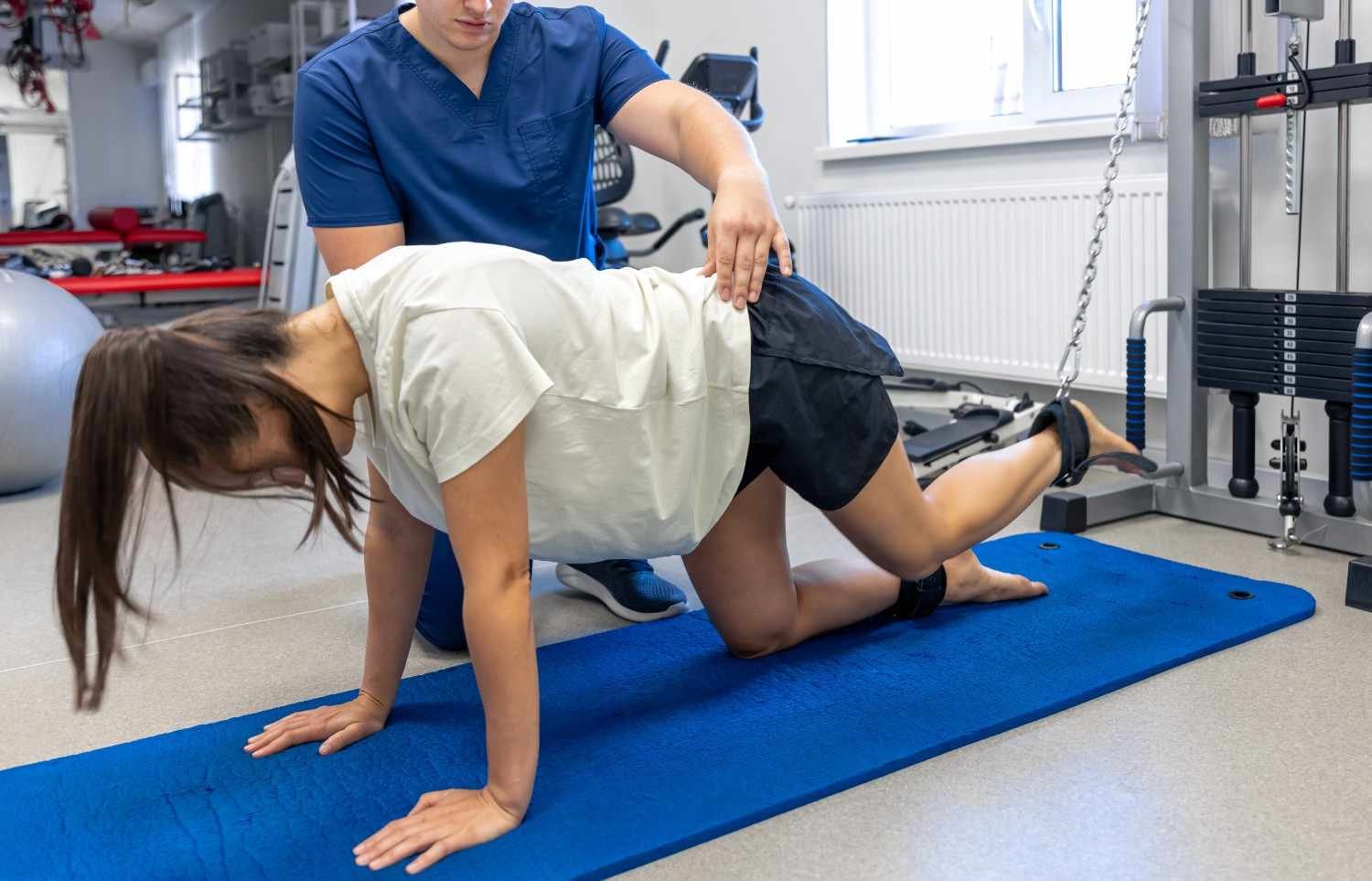
What kind of exercises do experts recommend at the Best Gluteal Tendinopathy Centre in Sector-51, Gurugram?
Gluteal tendinopathy is a common yet painful condition that affects daily movement, walking, sitting, and even sleep. At the Best Gluteal Tendinopathy Centre in Sector-51, Gurugram, physiotherapy experts focus on strengthening and stabilizing the hip muscles to reduce strain on the gluteal tendons. Their exercise-based approach is designed to restore mobility, reduce pain, and help patients return to normal activities with confidence.
At GS Physiotherapy, every treatment plan is customised, and exercises are progressed gradually according to the patient’s comfort level, symptoms, and lifestyle. Let’s explore the most effective exercises recommended by experts for managing and treating gluteal tendinopathy.
For fast notification, contact us on WhatsApp.
1. Isometric Hip Abduction Holds
Isometric exercises are often the first step in treating gluteal tendinopathy. They help reduce pain and activate the gluteus medius without stressing the tendon too much.
How to do it:
Lie on your side with the affected leg on top.
Keep both legs straight.
Gently lift the top leg upward just a few centimetres.
Hold for 10–20 seconds.
Repeat 8–10 times.
Experts at the Best Gluteal Tendinopathy Centre in Sector-51, Gurugram, use this exercise during the early phase to calm the tendon and build initial strength.
2. Side-Lying Leg Raises
Once the pain settles, controlled leg raises help strengthen the hip abductors. Stronger hip muscles support the pelvis better, reducing pressure on the gluteal tendons.
Steps:
Lie on your side with straight legs.
Lift the upper leg slowly to 45 degrees.
Lower it gently without letting it drop.
Perform 2–3 sets of 12 reps.
At GS Physiotherapy, therapists monitor alignment closely to ensure the exercise targets the right muscles instead of the lower back or hip flexors.

3. Clamshell Exercise
A popular glute activation exercise, clamshells are ideal for improving hip stability. They also help correct movement patterns that may be contributing to tendon irritation.
How to do it:
Bend your knees to a 90-degree angle while lying on your side.
Keep feet together.
Open the top knee like a clamshell while keeping the pelvis steady.
Perform 3 sets of 15 reps.
At the Best Gluteal Tendinopathy Centre in Sector-51, Gurugram, this exercise is highly suggested for improving hip alignment and efficiently isolating the gluteus medius.
4. Standing Hip Abduction with Resistance Band
As strength improves, resistance bands are introduced to provide progressive tension. This builds functional strength used in walking and daily activities.
How to do it:
Loop a resistance band around both ankles.
Stand tall with feet shoulder-width apart.
Move the affected leg outward slowly.
Return to the centre with control.
Perform 2–3 sets of 12 reps.
GS Physiotherapy experts suggest using light resistance initially and increasing intensity only when the tendon tolerates it well.
5. Single-Leg Bridges
This is one of the most beneficial exercises for glute strength and pelvic stability. It mimics real-life load-bearing movements and strengthens the entire posterior chain.
Steps:
With one leg straight and one knee bent, lie on your back.
Lift your hips using the bent leg, keeping the pelvis level.
Hold for 2–3 seconds at the top.
Perform 3 sets of 10–12 reps.
The Best Gluteal Tendinopathy Centre in Sector-51, Gurugram, includes this as a key progression exercise to help patients regain functional strength.
6. Step-Ups and Step-Downs
These exercises replicate activities like climbing stairs and walking uphill. They improve both balance and gluteal strength.
How to do it:
Use a low step or platform.
Step up with the affected leg and control the movement.
Step down slowly.
Perform 2–3 sets of 10 reps.
Therapists at GS Physiotherapy gradually increase step height as patients gain strength and stability.

7. Hip Hitching
Hip hitching strengthens the pelvic stabilizing muscles, especially the gluteus medius, which is often weak in gluteal tendinopathy patients.
Steps:
Stand on a step with one foot on the step and the other hanging off.
Slowly lower and lift the unsupported hip.
Keep the supporting leg straight.
Perform 3 sets of 12–15 reps.
This movement improves pelvic control, a crucial part of recovery at the Best Gluteal Tendinopathy Centre in Sector-51, Gurugram.
8. Controlled Squats
Squats help build strength in the glutes, quads, and hamstrings. However, they must be introduced carefully to avoid overloading the tendon.
How to do it:
Stand with feet hip-width apart.
Lower into a squat position while keeping weight on the heels.
Avoid letting the knees collapse inward.
Rise slowly to standing.
Perform 2–3 sets of 10–12 reps.
Physiotherapists at GS Physiotherapy provide real-time corrections to ensure proper form and avoid compensatory patterns.
9. Lateral Step Walking with Band
This is a great dynamic strengthening exercise often included in mid-to-late rehabilitation.
Steps:
Place a resistance band above the knees or around the ankles.
Bend slightly at the knees.
Take slow lateral steps without leaning sideways.
Walk 10 steps in each direction.
This functional drill is frequently prescribed at the Best Gluteal Tendinopathy Centre in Sector-51, Gurugram, to improve hip endurance and lateral stability.
10. Weighted Hip Thrusts
In the final stages of recovery, loading the tendon through controlled strength exercises helps rebuild resilience and prevent re-injury.
How to do it:
Sit with your upper back resting on a bench.
Place weights on your hips if tolerated.
Thrust hips upward and squeeze the glutes.
Hold for 2 seconds and lower slowly.
Perform 3 sets of 10 reps.
GS Physiotherapy specialists introduce weighted exercises only after ensuring the tendon is ready for higher loads.
Conclusion
Exercise is the most effective long-term treatment for gluteal tendinopathy, and the expertise at the Best Gluteal Tendinopathy Centre in Sector-51, Gurugram makes recovery efficient, safe, and customized. At GS Physiotherapy, every patient receives a structured, progressive exercise plan that focuses on reducing pain, improving glute strength, and enhancing overall mobility.
Through consistent practice and expert guidance, these exercises help patients regain full function and prevent recurrence. With the right supervision and scientific rehabilitation methods, gluteal tendinopathy can be completely managed—allowing individuals to return to active, pain-free living.
For more information about GS Physiotherapy, visit https://gsphysiotherapy.in/ to learn more about their services or to book an appointment.
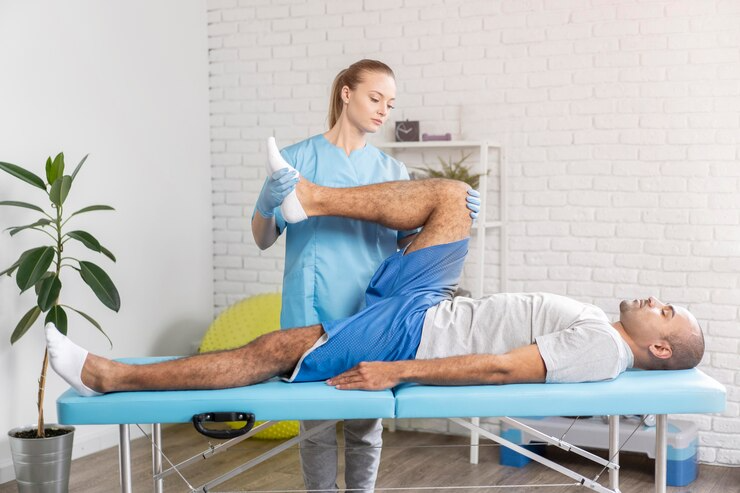
Why is GS Physiotherapy Considered the Best Physiotherapy Clinic in Gurgaon?
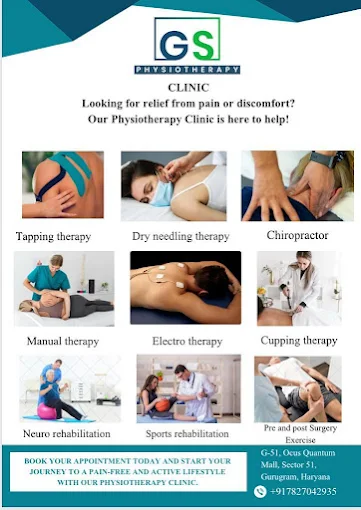
क्यों GS Physiotherapy को गुड़गांव में सर्वश्रेष्ठ फिजियोथेरेपी क्लिनिक माना जाता है?

What Techniques Are Used at GS Physiotherapy for Tennis Elbow Relief?